37%
of 76 highly cited animal studies were later replicated in human randomized trials.
Hackam and Redelmeier, JAMA 2006. Systematic review.A practitioner's guide for aesthetic injectors
Evidence levels, sponsor bias, and how to evaluate rep claims before they reach your patients. Written by a physician who reads the papers behind the products she uses.
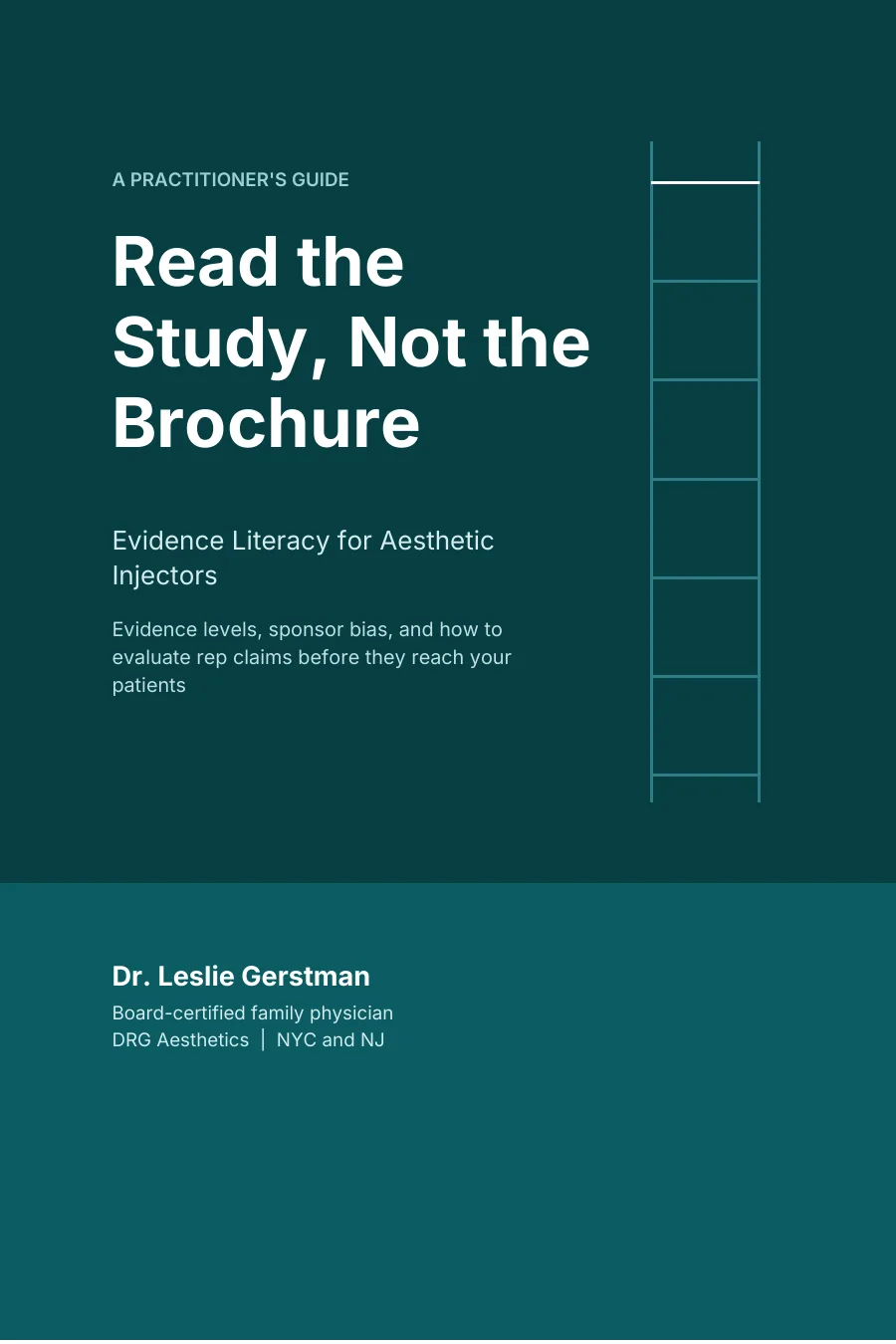
Every week a rep, a webinar, or an Instagram post tells you a product is "clinically proven," "FDA cleared," or "regenerative." Some of those claims rest on randomized trials. Many rest on a rabbit ear, a petri dish, or six patients photographed by the sponsor.
This book teaches you to tell the difference in about 15 minutes per paper, without a statistics degree.
37%
of 76 highly cited animal studies were later replicated in human randomized trials.
Hackam and Redelmeier, JAMA 2006. Systematic review.RR 1.27
Industry-sponsored studies reported favorable efficacy results more often, and standard risk-of-bias tools did not explain the difference.
Lundh et al., Cochrane 2017. Systematic review of 75 papers.7.12x
In plastic surgery journals, studies that disclosed a financial conflict were 7.12 times more likely to report a positive outcome.
Lopez et al., PRS 2015. Cross-sectional study of 568 articles.31%
of 74 FDA-registered antidepressant trials were never published. 94% of the published trials looked positive, compared with 51% in the FDA's own analysis.
Turner et al., NEJM 2008. FDA registry comparison.None of this means industry research is wrong. It means you need to know how to read it.
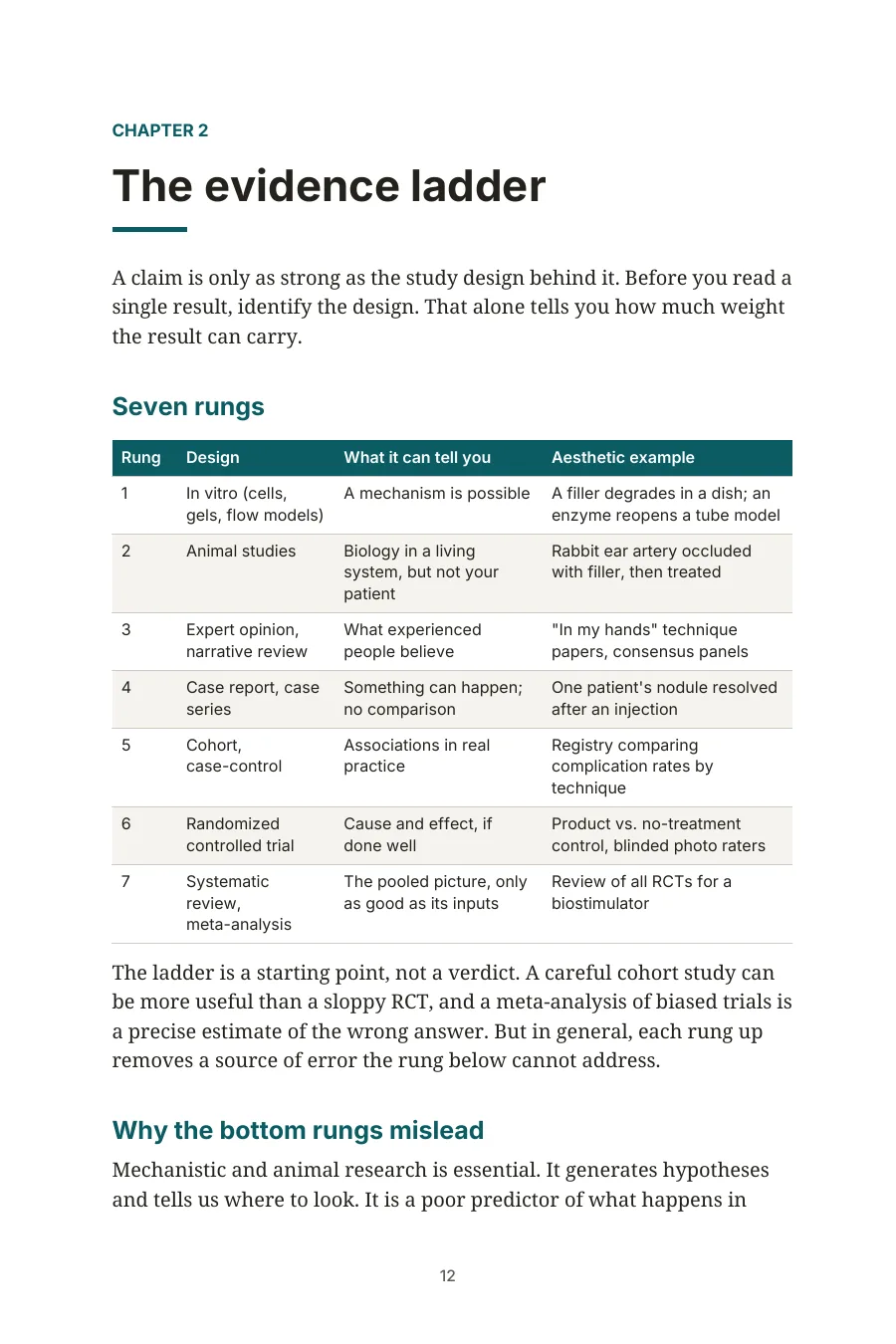
The evidence ladder, study designs, and the biases that matter most when outcomes are judgments of appearance.
Finding the evidence in PubMed, ClinicalTrials.gov, FDA databases, MAUDE, and Open Payments. Then trial anatomy, outcome scales, the numbers that matter, systematic reviews, and safety data.
Sponsor bias and spin, publication bias, industry relationships, regulatory language, social media, and consensus statements.
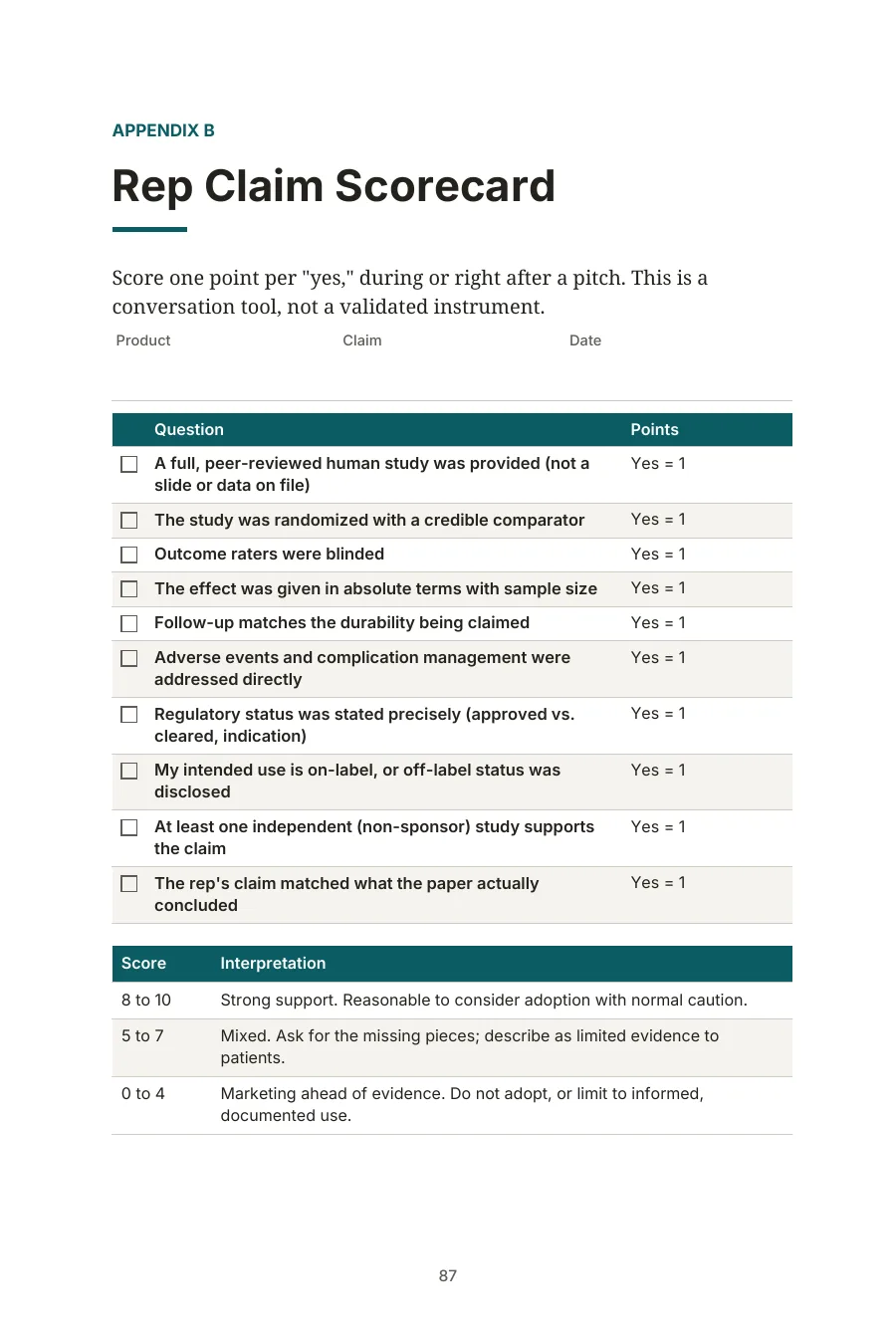
Evaluating rep claims, the 15-minute appraisal, communicating uncertainty to patients, and building an evidence-based practice.
Three full walk-throughs: a pivotal neuromodulator trial, a biostimulator systematic review, and the thin, conflicting evidence behind a CaHA complication protocol.
$99
One practitioner. The full PDF and all printable tools.
Buy nowFor practices
$249
Up to 5 staff in one practice. Use it for onboarding and journal club.
Buy nowSecure checkout by Stripe. Your download opens right after payment, and Stripe emails your receipt.
Checkout opens soon.
No. It is educational content for licensed practitioners and does not award CME credit.
No. You will not calculate a single standard deviation. Each chapter focuses on the questions to ask and where to find the answers in a paper.
No. Industry funds most aesthetic research, and much of it is good. The goal is calibration: holding each claim with exactly as much confidence as its evidence earns.
A 6 x 9 in PDF that reads well on a tablet or laptop, with tools you can print for your office.
The Individual license is for one practitioner. The Practice license covers up to 5 staff in one practice.